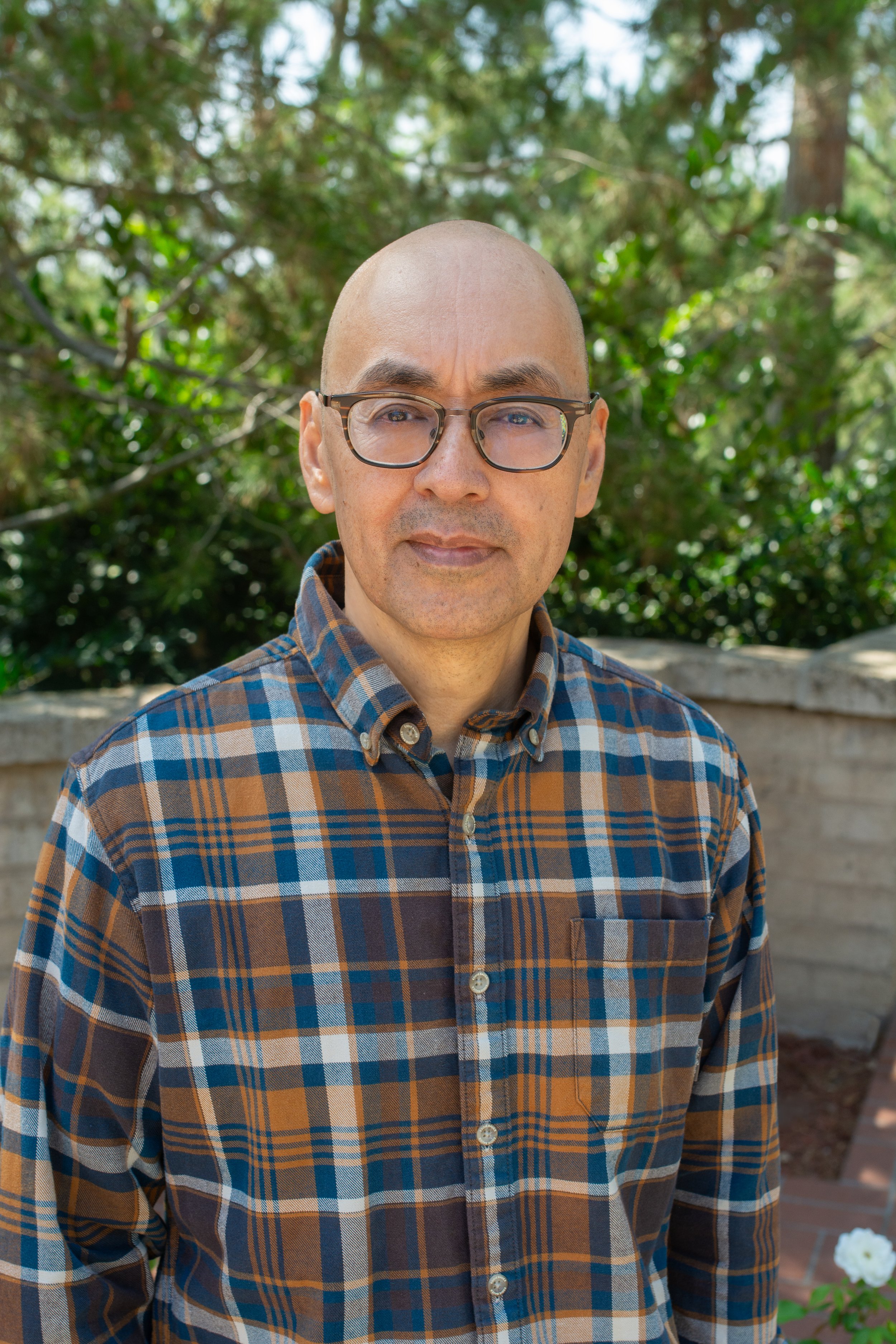
Augusto Andres
ORP: Who do you consider to be your creative ancestors and contemporaries for your art and/or writing? How does your creative work converse with theirs?
Augusto Andres: A friend gave me Rilke's Duino Elegies during a pivotal time, and his poetry has held a grip on me since. What draws me is how Rilke pairs observation of the human condition with exhortation. That is, naming something almost unbearably true about our mortality and our precious, limited time, then demanding something of the reader because of it. My poems don't demand in that same way, but holding close to what he does so well shapes how and what I write. I ask of my own work: is this worthy of being said? Does it get at the truth?
ORP: What does vulnerability mean to you as an artist and/or writer?
AA: The act of writing itself is vulnerable. You put words on the page and that leaves you open and exposed, whether or not anyone ever reads them. But storytelling and poetry ask for a different kind of vulnerability: the willingness to say the truest thing, even at the risk of cracking open a way of seeing or experiencing the world.
ORP: What would you say is your most interesting writing and/or artistic quirk? Do you have any habits that you believe help or hinder your creativity?
AA: I don't "kill my darlings," which I've been told many times writers have to do. Instead, anything I cut goes into a separate file. If a phrase or line or even a whole stanza doesn't work in a piece, I tell it: you can't live here, but I'll find you a home somewhere.
ORP: What books have you read many times?
AA: I rarely reread whole books, but I'll go back to pages I've dog-eared, or a chapter that's stayed with me. I often re-read favorite poems. Sometimes I try to read a paragraph as if it's the first time, to try and get back inside the story again, not just remember it. Other times I read analytically: why is this García Márquez passage so beautiful? How is this one sentence by Cormac McCarthy so terrifying? How is a line by Louise Glück so utterly devastating? And sometimes it's simply just wanting to feel those emotions again.
ORP: What do you hope readers (or your audience) will take away from your creative work?
AA: I'm drawn to what Annie Dillard describes wanting to reach when she writes, "I am trying to get at something utterly heartbroken." To me, that's an act of truth-telling. I can't control whether a reader feels what I felt, or feels moved at all by my words. But if I hope for anything, it's that a reader feels that truth land.